


FLORIDIANS PROTECT STATE PARKS FOR GENERATIONS TO COME
Ah, nature—surrounded by chirping birds and gentle waves lapping the coastline—until the sound of pickleball paddles or a golfer calling “Fore!” breaks the calm.
That scenario nearly became reality when nearly 20 state parks across Florida were considered for commercial development, with proposals ranging from tennis courts to full-swinging golf courses and plans for one of the largest waterfront lodges at Anastasia State Park in historic St. Augustine.
Florida stands out as the only state to have received the National Gold Medal Award for state parks four times and is a nominee again for 2025.
Last year, Sen. Kathleen Passidomo took to X (formerly Twitter) to share her concerns: “We have worked hard to improve our state parks with the goal of protecting and preserving natural habitats, and enhancing access to passive recreational activities like hiking, biking, or canoeing. Our vision did not contemplate the addition of golf courses and hotels, which in my view are not in-line with the peaceful and quiet enjoyment of nature.”
After widespread protests from residents across the state, the proposed industrial schemes sank when Gov. Ron DeSantis signed the State Park Preservation Act into law, effective July 1.
The new legislation put a halt to pavement and profit-driven projects, protecting Florida’s parks from bulldozers and big business.
“The Florida Department of Environmental Protection looks forward to implementing this other legislation that supports Florida State Parks and ensures exceptional experiences for residents and visitors alike,” shares Alexandra Kuchta, the communications director of the Florida Department of Environmental Protection.
Environmental organizations such as Audubon Florida, 1000 Friends of Florida, the Tropical Audubon Society, and the National Wildlife Federation all supported and endorsed the State Park Preservation Act.
“Our parks are not for sale. Today, we celebrate a turning point not just for our environment, but for the future of Florida,” asserts Javier Estevez, Political and Legislative director of Sierra Club Florida, highlighting the organization’s mission to protect the state’s natural environments, inspire awareness, and ensure ecological integrity.
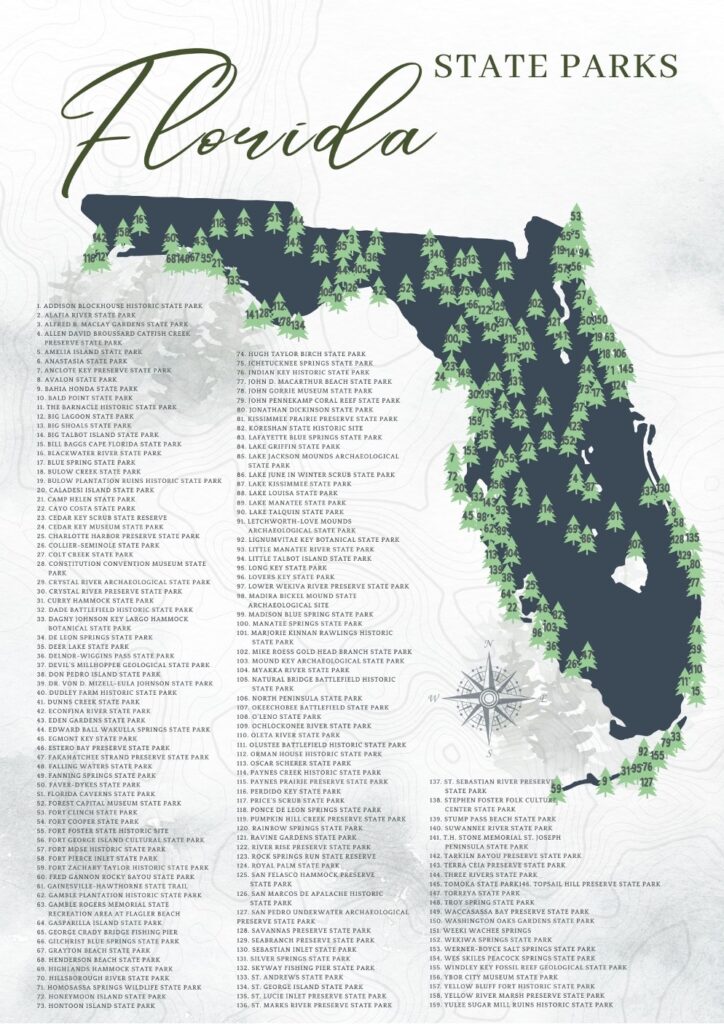
Florida is home to 175 state parks, spanning over 815,000 acres and 100 miles of sandy shoreline, with Fakahatchee Strand Preserve standing as the largest with 85,000 untouched acres. Each park holds a piece of history, from the legacy of the Seminole Tribe and echoes of the Civil War to the literary roots of Marjorie Kinnan Rawlings Historical State Park, where living chapters of classic novels and folk songs unfolded.
Florida’s parks are vital for preserving natural beauty, supporting wildlife, and connecting communities to the great outdoors.
“Collier-Seminole and Fakahatchee (State Parks) are just a short distance from the hubbub of Naples and Miami, offering people a wonderful opportunity to be surrounded by and immerse in nature and solitude. They offer a range of environments from prairie to mangroves. They fill in critical missing pieces of federal park treasures like the Everglades and Big Cypress,” explains retired land use and environmental attorney Christopher Duerken, who helped communities across Florida craft development codes to protect natural resources.
“I am a freelance writer for outdoor magazines like Florida Sportsman and American Fishing, plus my blog, hooknfly.com. These parks give me a firsthand look at the great job state park staff are doing to protect these gems, often with limited resources and funding,” adds Duerken. “You can experience rare cardinal air plants and wildlife like the Florida panther and mink. Of course, the fishing is great for a whole range of saltwater and freshwater species, from snook to tarpon and bass to Mayan cichlids.”
Parks across Florida play a crucial role in protecting rare and fragile habitats essential to the state’s biodiversity. Charlotte Harbor Preserve ranks as the third-largest state park in Florida, while Jonathan Dickinson is the largest in Southeast Florida. Meanwhile, Collier-Seminole conserves indigenous varieties of royal palms and mangroves, and Lovers Key supports native plants and shorebird nesting sites.
“Florida’s parks and wildlife are invaluable, and we work to advocate for smart growth while protecting the state’s special spaces and natural areas,” says Kimberleigh Dinkins, Policy and Planning Director of 1000 Friends of Florida, which focuses on regions including Palm Beach County, Collier County, and North Florida. “We are losing land every day across the state. Parks and conservation areas are essential not just for people, but for wildlife—they provide safe spaces to roam and act as sanctuaries.”
Dinkins, who has over 15 years of experience in natural resource procedure and management, including serving as a senior conservation associate with Save the Manatee Club, highlights the importance of preserving efforts like the Palm Beach Green Initiative and Florida Wildlife Corridor, an 18-million-acre network designed to support wildlife movement and connect habitats across the state.
“People come to Florida to experience its diverse natural landscapes,” she adds. “There was a lot of attention around the push to commercialize Jonathan Dickinson State Park, but smaller parks like Honeymoon Island State Park were also at risk. It was inspiring to see communities step up, speak out, and take ownership of their parks to fight back and protect them successfully.”
“Time and again, our amazing state parks offer unmatched value for Florida’s citizens and visitors alike,” says Tammy Gustafson, president of the Florida State Parks Foundation. “Not only do they provide public access to beautiful, natural, world-class outdoor recreation opportunities and fascinating historical sites, but they also attract visitors from across the nation and world while supporting thousands of jobs.”
According to the Florida State Parks Foundation, nearly 30 million visitors explored the state’s parks last year, contributing to an estimated $3.9 billion in economic impact and supporting more than 52,000 jobs statewide.
Among those parks, five regional sites—Lovers Key in Fort Myers Beach, Koreshan in Estero, Charlotte Harbor Preserve in Punta Gorda, John D. MacArthur Beach in North Palm Beach, and Collier-Seminole in Naples—welcomed a combined total of over 1.4 million visitors. On average, each of these parks supported around 490 jobs and generated approximately $35 million.
The Florida Park Service reports that the state’s parks include more than 1,500 miles of multiuse trails for walking, hiking, biking, and horseback riding. In Lee County, officials have approved a $3.89 million FEMA and state-funded contract with Stokes Marine Inc. to restore boardwalks damaged by recent hurricanes.
“The Flatwoods Trail is an excellent hike for families with kids as well as an easy trip for bicyclists,” says Duerken, regarding the Collier-Seminole State Park. He noted that path conditions vary with the weather, shifting from murky wetlands lined with bald cypress strands to firmer forest floors that support the growth of vegetation, providing food and shelter for a variety of forest wildlife.
“I find the key to really enjoying this environment is to not only look up and into the trees to spot birds and large wildlife, but also to keep an eye focused on the ground close by, looking for little things—flowers, tree snail shells, interesting small critters like shrews and lizards. Kids are often better at that than adults,” adds Duerken, pointing out wildflowers such as yellow tickseeds and blue-eyed grass that attract butterflies like the Buckeye and White Peacock.
Conservation groups are advancing their efforts alongside state parks. The Conservancy of Southwest Florida has monitored 20,000 mangroves and protected 552 sea turtle nests. Last year, Conservation Florida and Palm Beach County preserved more than 31,000 acres of natural land. At Lovers Key State Park, the Discovery Center helps protect coastal wildlife through programs like Adopt-A-Nest, where sponsors adopt sea turtle nests to fund conservation.
“If there are chances to help fellow researchers out or provide a window into the lives of these animals, you just say yes,” says Dave Addison, Sea Turtle Biologist, Conservancy of Southwest Florida.
Florida’s state parks offer year-round events and programs. At Koreshan State Park, members of The Carlisle Striders participated in a docent-led tour of the historic settlement, combining physical activity with learning.
Natalie Lewis, residents’ council chair for the Zest Program and a Carlisle Naples resident, shares, “Learning about the Koreshans and their way of life was fascinating.” She adds, “The group’s curiosity and engagement were wonderful to see.”
Lewis noted that visiting state parks connects locals to the “greater fabric of our city” and Florida’s rural areas. She explains that firsthand experiences in the parks are more meaningful than just reading about them and often inspire conversations that strengthen community bonds.
“Spending time in nature is so important. It allows us to interact with the environment and learn about what once existed in these spaces,” Lewis says. “Nature provides both physical and emotional benefits. Many parks have trails that encourage walking, which supports fitness, and the educational elements stimulate the mind. Being outdoors helps us tune into the little things, such as the sound of birds and the vibrant colors of flowers. It offers a calmness and a welcome break from our everyday routines.”
Reflecting on the wildlife experience, Lewis stated, “We learned about local bird species. Watching them take flight was awe-inspiring. The mix of delight and wonder made the experience truly special. It is a lasting experience, and more communities should take advantage of what these parks offer.”
Florida’s state parks preserve the story of a wilder time, offering a rare glimpse into the landscapes that existed long before highways and high-rises. These protected spaces preserve Florida’s ecological and cultural heritage while providing lasting benefits for both residents and visitors.
The state law now guarantees public involvement, requiring community input and two public hearings before any changes to park management can proceed.
“The signing of the State Park Preservation Act is a monumental victory for Florida’s beloved state parks—and a powerful testament to what Floridians can achieve when we stand together,” says Kristine Cunningham, Executive Committee Chair of the Sierra Club Florida. “In just 10 months, we transformed a reckless plan to pave over our parks into a law that protects them forever. This achievement is nothing short of historic.”