


Time to Found a New State
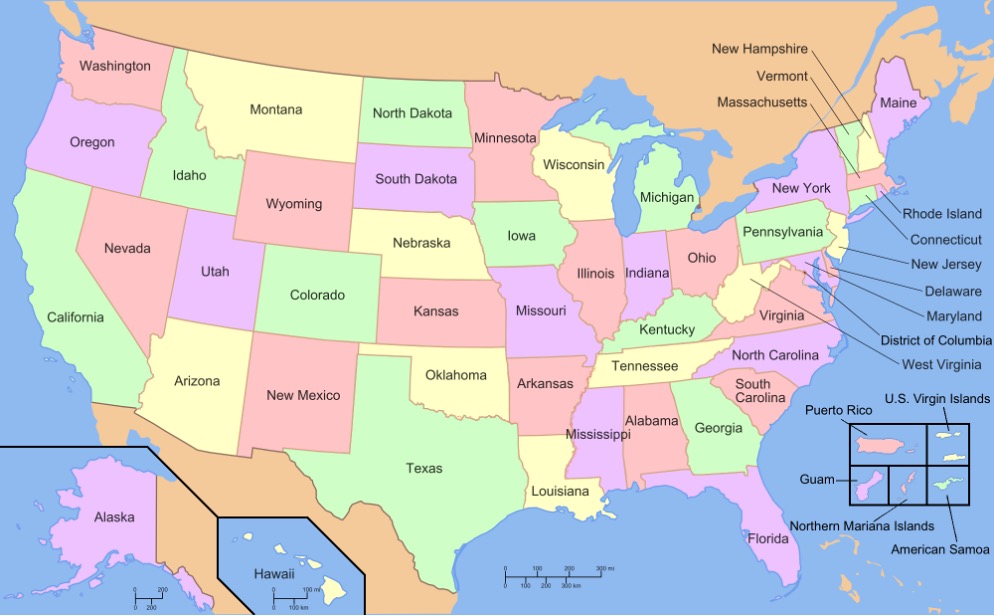
Nestled in the heart of Texas, King Ranch stands as a testament to the vastness of American ranching. Covering an impressive 825,000 acres, it surpasses the land area of both Rhode Island and Luxembourg. This sprawling expanse makes King Ranch the largest ranch in the United States, boasting a rich history dating back to its founding in the mid-19th century.
Primarily dedicated to cattle ranching, King Ranch also made its mark in the world of horse racing, breeding the legendary Triple Crown-winning racehorse, Assault.
This iconic ranch embodies the spirit of the American West, with its wide-open spaces, rich agricultural heritage, and enduring legacy in both ranching and equestrian pursuits.
Tense Borders
Russia and the USA are separated by a mere 4 kilometers (2.5 miles) at their closest point, connected by the Bering Strait. Despite its narrow width, this strait is a vibrant ecosystem brimming with wildlife. Positioned between Alaska and Russia, it serves as the sole marine passage between the frigid Arctic and the Pacific Ocean.
Measuring just 55 miles across at its narrowest point, the Bering Strait offers the possibility of crossing from Alaska to Russia by sea. However, such a journey is strictly regulated, requiring prior authorized access. While the strait presents a potential link between two continents, its protected status underscores the importance of respecting international boundaries and environmental conservation efforts.
A Sizable State, Not Much for a Reservation
Spread across the nation, there are approximately 326 federally administered Indian land areas, encompassing reservations, pueblos, rancherias, and other communities. Among these, the largest is the expansive Navajo Nation Reservation, spanning a colossal 16 million acres across Arizona, New Mexico, and Utah.
This vast expanse serves as a testament to the rich cultural heritage and enduring presence of Native American communities in the United States. It highlights the significance of these lands as integral parts of the nation’s diverse tapestry, preserving traditions and fostering resilience for generations to come.
Maps Are Misleading
Despite popular perception, the United States extends much farther south than many realize, even though it offers a climate that can be comparable to regions further north in Europe. This intriguing phenomenon arises from various factors, including the influence of ocean currents, wind patterns, and elevation differences.
North America Not So Far North
Surprisingly, New York City, nestled on the eastern coast of the United States, sits further south than the historic city of Rome in Italy. While Rome’s rich history and ancient landmarks may evoke images of a Mediterranean climate, the geographical reality places it at a higher latitude than the bustling metropolis of New York City.
This intriguing fact may come as a surprise, given the common perception of Rome as a southern European city and New York’s chilly winters. However, this geographical quirk highlights the diverse range of climates and landscapes found across the globe, challenging assumptions about latitude and its influence on a city’s position relative to the equator.
The World Record for Lighthouses Goes To…
Michigan proudly holds the title of the U.S. state with the most lighthouses, boasting a remarkable collection that spans its extensive coastline. With over 3,200 miles of shoreline and a bustling network of waterways, Michigan’s need for navigational aids is evident.
From the rugged shores of Lake Superior to the sandy beaches of Lake Michigan, each of Michigan’s lighthouses stands as a sentinel, guiding ships safely through the Great Lakes. The state holds the record with a whopping 129 lighthouses total along its shores.
Once, The Appalachian Was the Biggest Mountain Range
In the annals of Earth’s geological history, Pangea emerges as a remarkable chapter—a supercontinent that united almost all landmasses into a single entity. Formed during the Early Permian Epoch, roughly 299 to 273 million years ago, Pangea was encircled by a vast ocean known as Panthalassa.
Within this immense landmass, the Appalachian Mountains occupied a central position, pressed against ancient mountain ranges now located in Morocco and Scotland. Over time, the Appalachians underwent a cycle of erosion, gradually wearing down to near-flat terrain before experiencing a resurgence, shaping them into their present-day form.