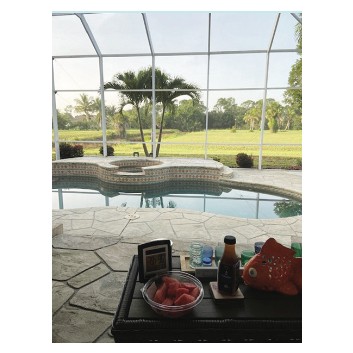




FEATURED RESIDENTS, SANDHILL CRANE – CHICKIE PANTS
A LIFELONG HOME FOR CHICKIE PANTS
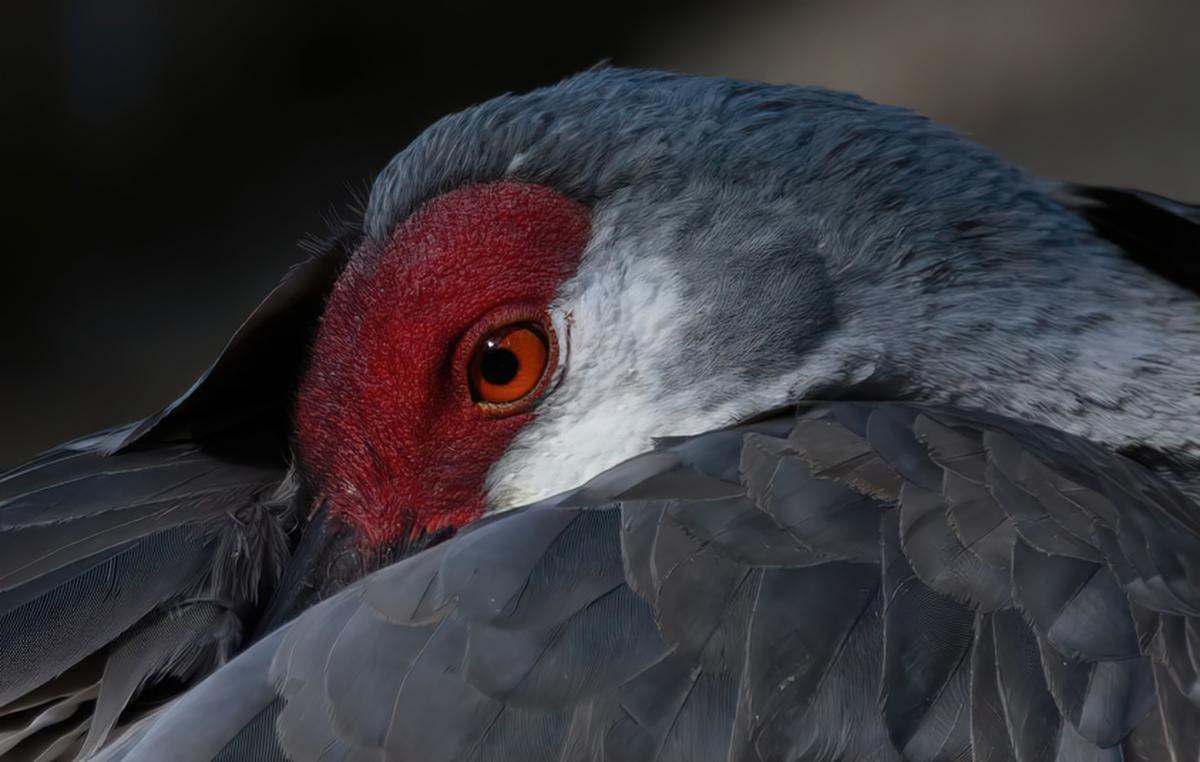
Chickie Pants arrived at Peace River Wildlife Center in May 2013 after a rescuer responded to a young Sandhill Crane caught in a barbed wire fence. The injured crane’s parents and sibling had remained nearby. When the rescuer noticed that the sibling’s beak was slightly off-kilter, both young cranes were brought to PRWC.
Sadly, the crane caught in the fence did not survive the spinal trauma caused by the entanglement. Chickie Pants initially thrived, but as he grew, his beak became increasingly deformed. The upper and lower portions curved in opposite directions, making it impossible for him to feed himself successfully in the wild.
Today, Chickie Pants requires regular beak trimming and specially placed food bowls that allow him to eat. He also receives continued care for a problem with his right leg that required orthopedic surgery. Because of these lifelong needs, he remains a permanent resident at PRWC.
Chickie Pants’ story is a reminder that wildlife rehabilitation does not always end with release. Sometimes, it means providing a safe permanent home and specialized care for an animal that can no longer survive independently.
Chickie Pants can be symbolically adopted for $15 per month, helping support his continued care and the care of PRWC’s other permanent residents.
Learn more about Chickie Pants

What’s Been Happening at the Wildlife Hospital
August 1-31, 2026
216 INTAKES
24 RELEASES
1 TRANSFER
Intakes in 2026 — 2,265
This month, our most common patients were: Eastern Cottontail | Mourning Dove | Raccoon | Gopher Tortoise | Eastern Grey Squirrel
WILDLIFE RESCUE & EDUCATION
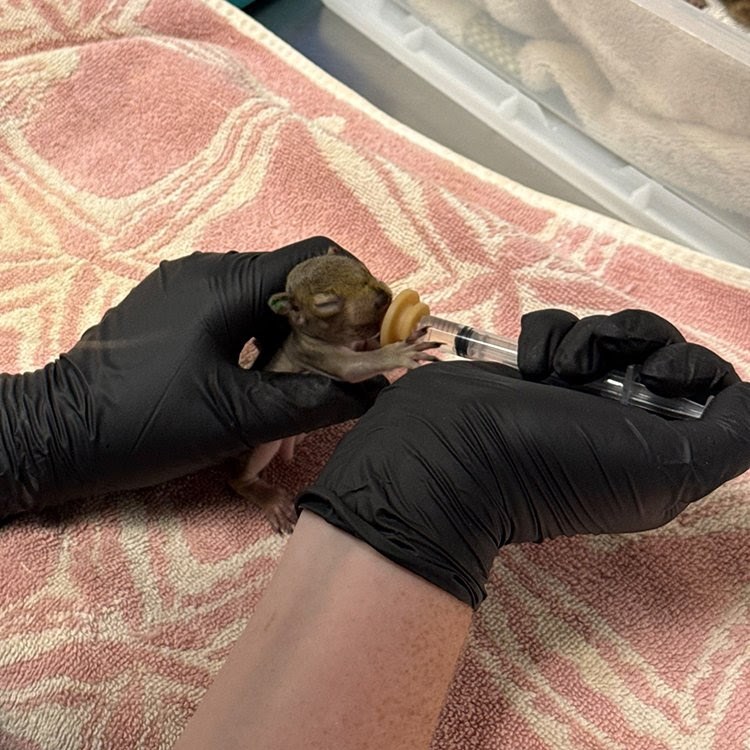
IT’S SQUIRREL SEASON: WHAT TO DO IF YOU FIND A BABY SQUIRREL
Each year, late summer brings an increase in calls about baby squirrels found on the ground. While it’s natural to want to help, the good news is that many of these babies are not actually orphaned and have the best chance of survival if they can be reunited with their mother.
Gray squirrels typically have two breeding seasons each year, and by this time of year many young squirrels are just beginning to explore outside the nest. Wind, storms, nest damage, or simple curiosity can sometimes lead to babies ending up on the ground. Fortunately, mother squirrels are excellent parents and will often return to retrieve their young if given the opportunity.